











Architecture that scales without a re-platform

Sustainable healthcare architecture for payers, ministries, hospitals, medical-device makers, ISVs, and founders. Modular, FHIR-native, carbon-aware. Built to last a decade.

Outcomes

Architecture that is still the right one in year seven

Outcomes from healthcare architectures we have built, and the ones we are still operating today across AWS, GCP, and Azure.

10 years

Architecture lifespan before the next re-platform is on the table.

30 to 50%

Cloud cost and carbon reduction after a Life Value architecture review.

AWS, GCP, Azure

Carbon footprint measured with our open-source Cloud Carbon Footprint CLI.

technologies

Built with the right tech stack for Healthcare

React
Angular
Vue.js
Ruby on Rails
Python
React Native
Flutter
iOS
Android
React
Angular
Vue.js
Ruby on Rails
Python
React Native
Flutter
iOS
Android
React
Angular
Vue.js
Ruby on Rails
Python
React Native
Flutter
iOS
Android

Ready to build your product with confidence?

Talk to a product strategist. No pressure. Just clarity.

FAQ’s

Frequently Asked Questions

We’ve answered the questions we hear most from healthcare teams, founders, and partners. Don’t see yours? Reach out: we’re here to help.

What does sustainable architecture mean for a hospital or payer in practice?

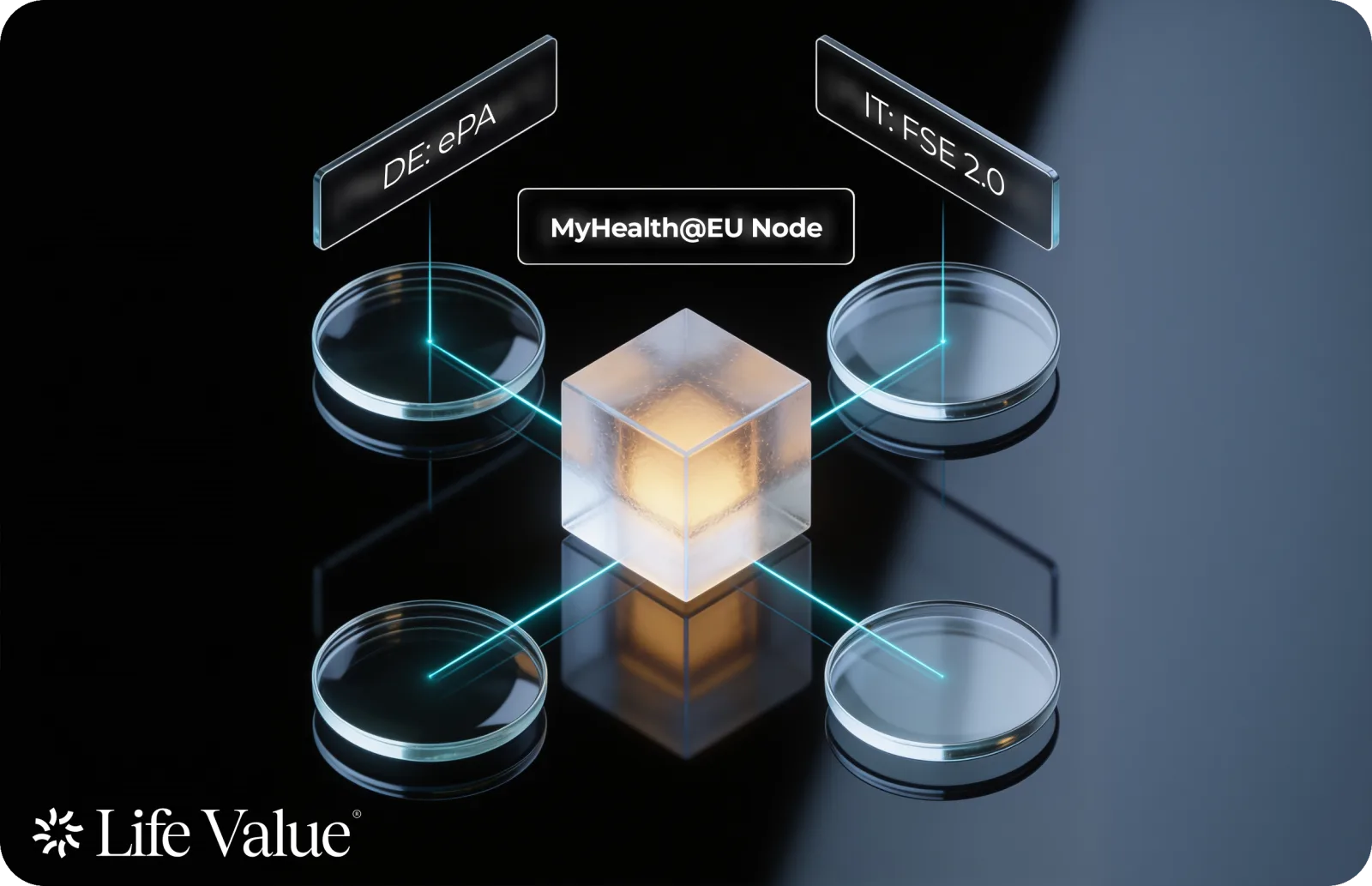
Two things at once. Technical sustainability means the architecture is still the right one in year seven. Hexagonal layering separates the FHIR domain from the EHR adapter, the payer adapter, and the patient adapter, so a new Epic release or a new CMS-0057-F payer API does not force a rewrite. Ecological sustainability means the workload is right-sized, carbon-aware, and idle compute is shut down. Both belong in the first architecture decision record, not bolted on at year three.

How do you actually measure the carbon footprint of a healthcare cloud workload?

With the Cloud Carbon Footprint CLI, a Life Value open-source project that reads AWS, GCP, and Azure billing and usage data and converts it into kilowatt-hours and CO2e by region. A hospital CIO sees the kilograms of CO2e produced by the imaging archive last quarter. A payer infrastructure lead sees which claims-processing region runs on the dirtiest grid. The output maps to GHG Protocol scope 3 categories and feeds the CSRD report the sustainability team has to file.

How do you handle data residency without paying for active-active everywhere?

Residency rules are mapped per jurisdiction first. EHDS and national health data spaces in the EU. State-specific medical-records and HIPAA constraints in the US. C5 in Germany. HDS in France. The architecture then runs active-active only where a residency rule or a recovery time objective requires it, and active-passive everywhere else. A ministry of health pays for the regions the law forces. An ISV running a multi-tenant platform routes each tenant to the region their contract specifies. No paying twice for compute that the regulator never asked for.

How do you avoid the re-platform every 18 months that keeps eating our roadmap?

The re-platform usually happens because the early team made three decisions that were cheap then and expensive now. They coupled the FHIR layer to one EHR vendor. They picked a managed service that does not exist in the new buyer's preferred cloud. They skipped the architecture decision record, so nobody remembers why. We use hexagonal architecture, FHIR R4 as the canonical data model, and event-driven integration only where it earns its complexity. Each ADR is checked into the repo. The team in year four can still read the reasoning from year one.

Can’t find the answer you’re looking for? 
We are here to help.

Ready to accelerate your next digital health breakthrough?

Whether you're launching a new solution or scaling an existing product, Life Value gives you the clarity, speed, and compliance needed to move with confidence.