










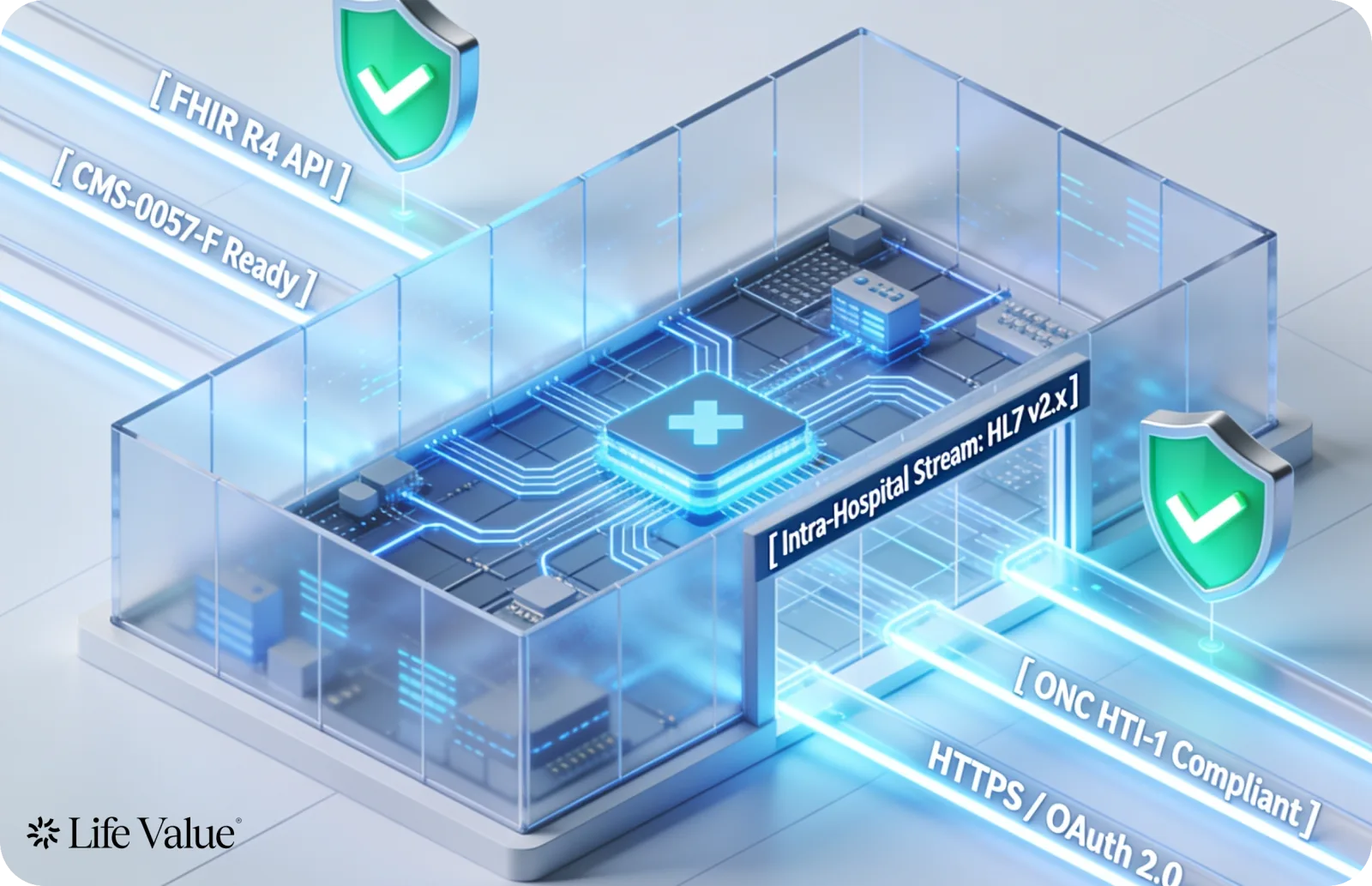
Custom AI agents built for the clinical workflow

Production-grade clinical AI agents for payers, ministries, hospitals, healthcare enterprises, ISVs, and founders. FHIR-native. EU AI Act conformity-ready. HIPAA on day one.

Outcomes

Agents that shipped and stayed in the clinical workflow

Outcomes from the clinical AI agents we have deployed across payers, hospitals, ministries, enterprises, ISVs, and founder products.

6 to 10 weeks

From scoping to a clinician-supervised pilot inside the EHR.

100%

HIPAA-eligible LLM tier, BAA in place, no public-API calls on PHI.

Every action

Prompt, retrieval, and tool call logged for the EU AI Act audit record.

technologies

Built with the right tech stack for Healthcare

React
Angular
Vue.js
Ruby on Rails
Python
React Native
Flutter
iOS
Android
React
Angular
Vue.js
Ruby on Rails
Python
React Native
Flutter
iOS
Android
React
Angular
Vue.js
Ruby on Rails
Python
React Native
Flutter
iOS
Android

Ready to build your product with confidence?

Talk to a product strategist. No pressure. Just clarity.

FAQ’s

Frequently Asked Questions

We’ve answered the questions we hear most from healthcare teams, founders, and partners. Don’t see yours? Reach out: we’re here to help.

Why build a custom AI agent instead of buying Abridge, Ambience, Nabla, or Microsoft DAX?

The off-the-shelf scribes work for general primary care. They do not work when the specialty needs OBGYN antepartum templates, oncology staging language, or behavioral health risk documentation that the vendor catalog does not cover. Custom is the right call when the buyer is a hospital service line, a payer claims team, a medical-device company, or an ISV adding AI to an existing product and the workflow is the differentiator, not the LLM.

Where does the LLM actually run, and what stops PHI from leaking to a public API?

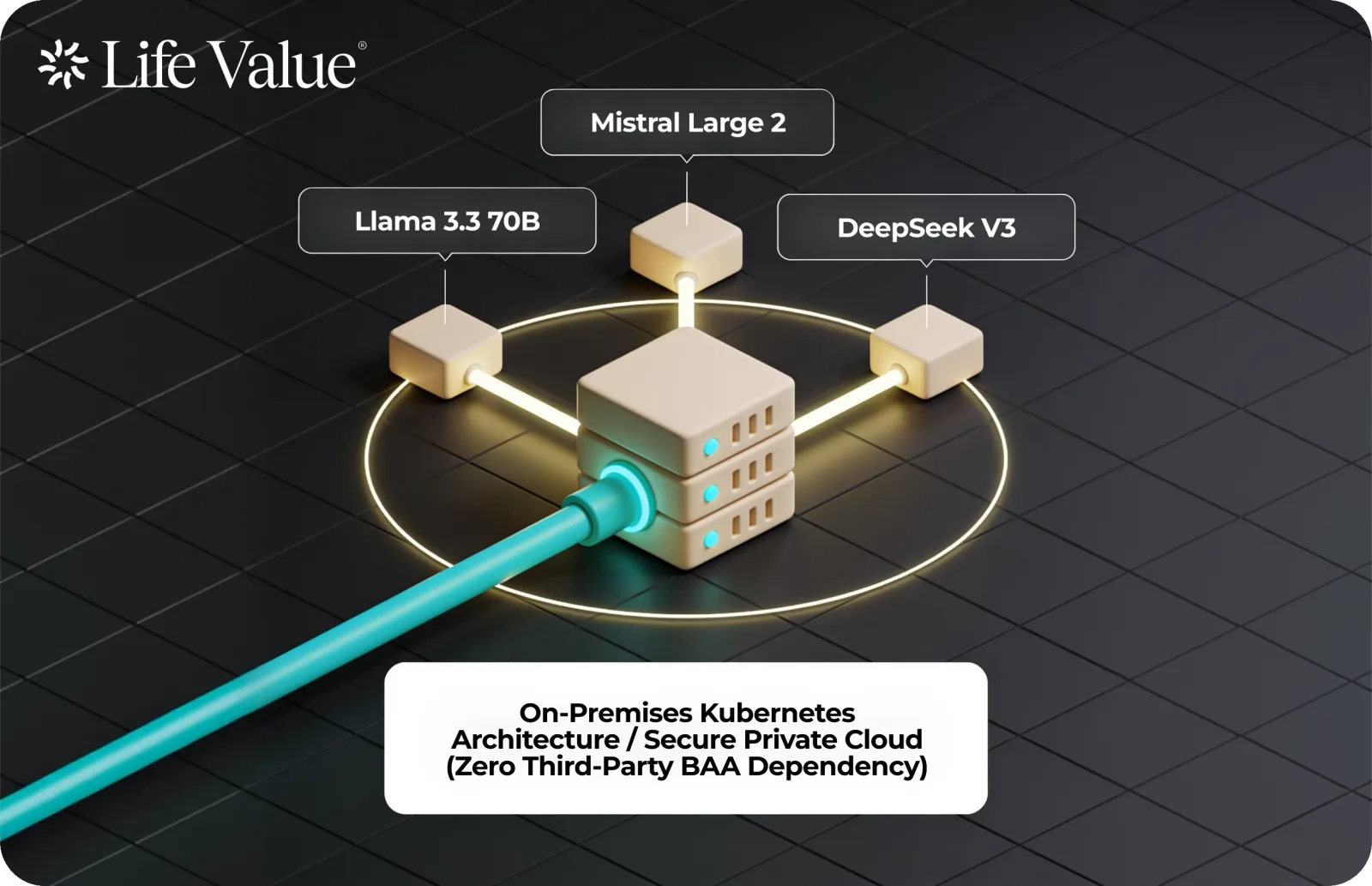
Inference runs on AWS Bedrock with PrivateLink on the HIPAA-eligible tier, Azure OpenAI on the HIPAA-eligible tier, or Google Vertex AI under HIPAA. A Business Associate Agreement covers the model host plus every subprocessor in the chain. We do not call the public OpenAI API for PHI. Network egress to non-BAA endpoints is blocked at the VPC boundary. The audit log shows which model version answered which prompt against which patient context.

How does the agent talk to Epic, Oracle Cerner, MEDITECH, or athena?

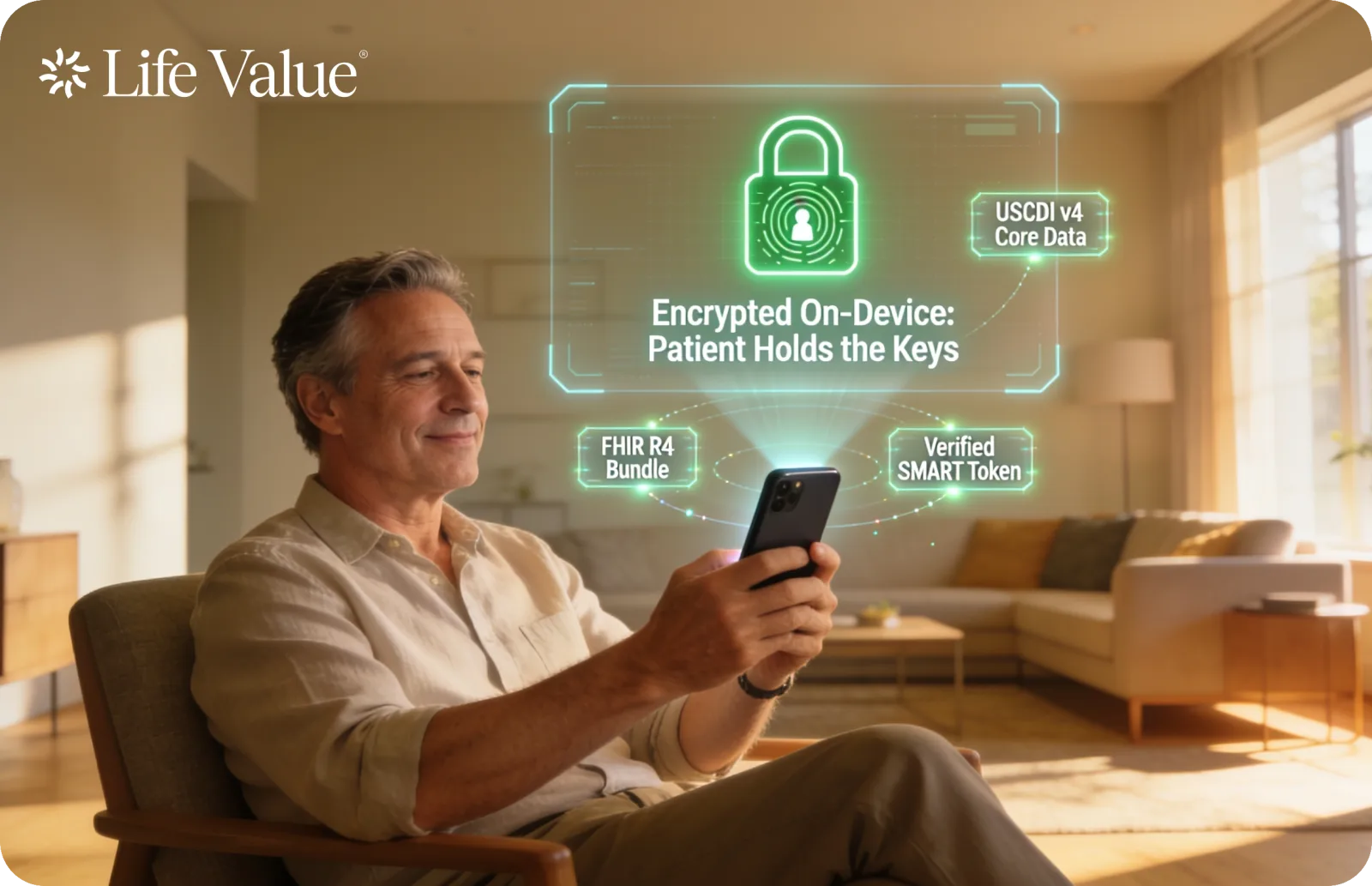
The agent talks to an FHIR R4 layer. The FHIR layer talks to the EHR via SMART on FHIR. The clinician launches the agent from Epic Hyperspace, Oracle Cerner PowerChart, MEDITECH Expanse, or athenaOne with patient context already populated. Triage, intake, scribe, prior authorization, claims, eligibility, and follow-up agents all read and write through the same FHIR layer, which keeps the integration count to one regardless of how many agents the buyer rolls out.

What does EU AI Act and FDA SaMD compliance look like in practice for a clinical agent?

Clinical decision support agents fall under the EU AI Act high-risk category, which means a conformity assessment record, a risk management file, post-market monitoring, and human oversight documented in the workflow. GDPR Article 9 governs special-category health data and Article 22 governs the transparency obligation when an agent contributes to an automated decision. Where the agent meets the FDA SaMD definition, we route it through the appropriate 510(k) or De Novo path. HHS OCR guidance on AI bias is addressed with a documented evaluation set.

Can’t find the answer you’re looking for? 
We are here to help.

Ready to accelerate your next digital health breakthrough?

Whether you're launching a new solution or scaling an existing product, Life Value gives you the clarity, speed, and compliance needed to move with confidence.